The sliding door is the biggest, most-used opening in most homes — so when its lock stops catching, the problem is urgent in two currencies at once: security and the daily fight at the handle. The good news is that the cause is diagnosable, and it is often not the lock.
Cause 1: The door has settled out of alignment
The most common reason a previously fine lock stops engaging is that the door moved. Rollers wear, the panel drops a few millimeters, and the lock's hook now strikes the keeper's edge instead of entering it. The tell-tale: the lock works if you lift the door slightly, lean on it, or slam it with conviction. Forcing it that way bends hooks and cracks housings, converting a free adjustment into a hardware purchase. The fix is underneath: roller height and panel square, our alignment work. Always price the alignment before the lock.
Cause 2: The lock itself has worn out
Mortise locks do die of honest work: hooks round over, springs tire, the latch retracts slowly or not at all. Diagnosis is tactile — a hook with a visibly rounded or burred edge, a mechanism that feels gritty or loose, a handle that no longer springs back. Replacement means matching the door's mortise pattern with a new assembly and keeper, then aligning the pair and proving the latch under a firm pull. That is our lock and handle service, and it is same-visit work for the common patterns.
Cause 3: The keeper or strike has shifted
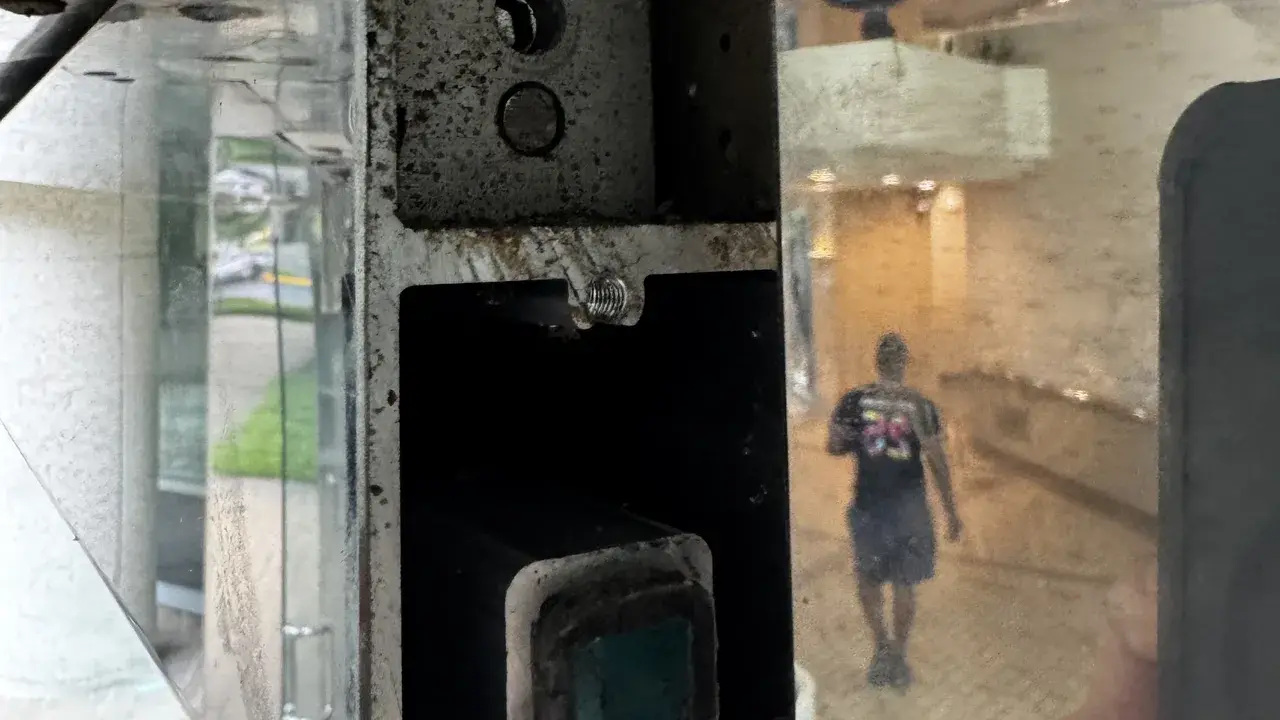
The jamb-side half of the lock is screwed into a frame that also moves. Keepers loosen in their screws, shift when a door is slammed hard for a season, or were never perfectly placed after a past repair. A keeper sitting a few millimeters off produces a lock that feels broken and is merely unmet. Adjustment here is minutes with the door's true position established first — keeper set to the lock the door actually has, not the one it had when the house was new.
The security conversation, without the theater
Once it locks again, the honest question is how much security a sliding door can have. The baseline facts: a standard latch is a light mechanism, and a panel that can be lifted in its frame defeats any latch made. So the layers that matter are these. First, anti-lift: blocks or screws in the head track that deny the panel the upward travel it needs to be lifted out — cheap, invisible, and the single most valuable security measure on a sliding door. Second, a secondary lock: a foot bolt or jamb-mounted security latch that gives the door a second, independent locking point, ideally one that can also secure the door slightly open for ventilation. Third, the classics that work: a fitted bar or dowel in the track, which no amount of latch-picking addresses. Glass itself is the honest limit — the goal is to defeat the quiet, casual attempt, and these layers do.
What does not help
Replacing a sound lock with a bigger sound lock on a settled door. Alarms stuck on a door that still cannot latch. And ignoring the problem with a stick in the track while the lock hangs broken — the stick is a fine layer, but a door whose primary lock has failed is telling you its rollers or alignment need attention, and that message will be delivered again, louder, by the hardware. Fix the cause, keep the stick as the bonus layer it is good at being.
The order of operations
Diagnose alignment first, keeper second, mechanism third. Restore the lock to a clean, full engagement proven by a pull test. Then add the anti-lift measure — five minutes while the tools are out — and discuss one secondary lock if the household wants the layer. That sequence converts the most annoying door in the house into the most secure-feeling one, usually in a single visit, and it starts with a phone call describing exactly what your lock does now. The details — lift-and-it-catches, gritty mechanism, keeper screws loose — are the diagnosis half-delivered before we arrive.