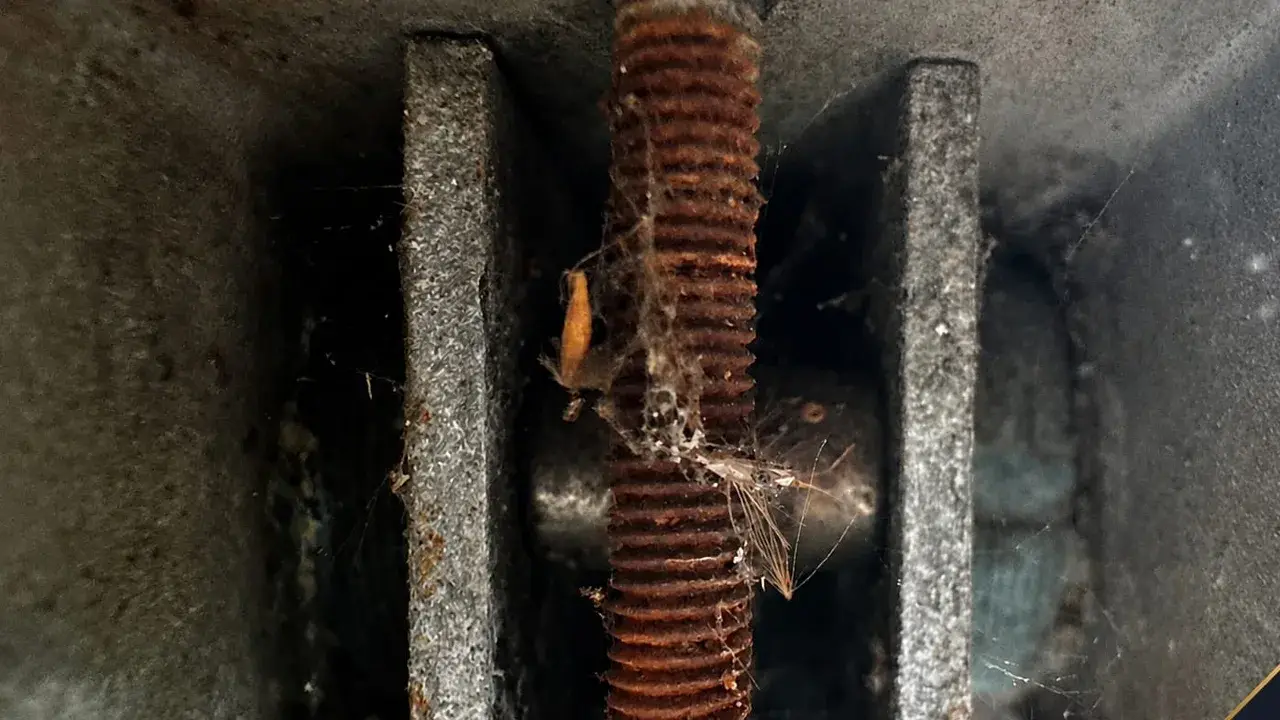
A sliding door a mile from the ocean lives a different life from the same door inland. Salt aerosol settles on every surface, pulls moisture from humid air, and starts chemistry that inland doors never meet. Coastal homeowners feel it as doors that age in dog years. Here is what the salt is doing to each part of your door, and what actually resists it.
Rollers: bearings are the beachhead
Standard steel roller bearings are usually the first casualty. Salt film creeps into the bearing, rust begins, and the wheel that should spin freely starts to drag, then grind, then seize — the progression our wear guide describes, compressed into half the inland time. The coastal specification is stainless steel or quality nylon wheels with sealed or corrosion-resistant bearings; fitted inland-grade, a beach door eats rollers as a recurring subscription. When we replace rollers within sight of salt water, material choice is the first conversation, not an upsell — it is the difference between a repair and a rhythm.
Tracks and sills: pitting and the galvanic trap
Aluminum tracks pit under salt deposits, roughening the riding surface until every pass of the wheel feels like gravel. Worse is the galvanic trap: where dissimilar metals meet in salt moisture — a stainless fastener in an aluminum frame, a steel track component against aluminum — the less noble metal sacrifices itself, and corrosion concentrates at exactly the joints and screws. Symptoms include white, powdery corrosion blooms on aluminum and rust weeping from fastener points. Mitigation is housekeeping plus specification: rinse the track of salt regularly (the care routine, run monthly at the coast), and where a track is already pitted, a stainless track cap restores the surface with a metal that belongs in the neighborhood.
Locks, handles and springs
Lock mechanisms concentrate everything salt loves: small springs, tight pivots, dissimilar metals in contact, and a housing that traps humid air. Coastal locks go gritty, then stiff, then snap their tired springs — often presenting as a "broken lock" that is really a corroded one. Marine-minded specification helps (stainless and coated components), as does a twice-yearly cycle of the mechanism with a dry lubricant. When a coastal lock is replaced, our lock service fits hardware chosen for the exposure and aligns it so corrosion is the only enemy, not friction too.
Frames, screens and the slow edges
Aluminum frames tolerate salt better than their hardware but still pit at scratches and at the sill, where standing salt water concentrates — keep sill drains clear so the frame is never sitting in its own brine. Screen mesh and spline corrode at the edges; pet mesh's vinyl coating earns its keep here too. Fasteners throughout the door are the quiet failures: a screen or panel guide held by corroding screws lets go suddenly rather than gradually. Any coastal door service worth its invoice includes a fastener and drain check for exactly this reason.
The coastal maintenance clock
A note on warranties and materials paperwork
When corrosion work is done — rollers, a track cap, lock hardware — keep the invoice that names the materials. It matters twice: once if a part fails early and the material specification is the warranty conversation, and again at resale, when a coastal home's buyers (and their inspectors) ask exactly what the salt air has been eating and what was done about it. A door serviced with stainless where stainless belongs, and documented that way, is a small asset. A door with a mystery repair history is a question mark with a handle. We write the materials on our invoices for precisely this reason, and your future self — selling, insuring or simply reordering a matching part — will be glad we did.
Everything inland is "every few months," the coast reads as "monthly, briefly": rinse and dry the track, wipe hardware, work the lock, check the drains. The professional interval halves as well — a tune-up rhythm of once a year keeps corrosion priced as cleaning and adjustment rather than parts. And when parts do come due, specify once for the environment: stainless where steel failed, capped where aluminum pitted, sealed where bearings drank salt. A coast door maintained on its own clock glides like any other. A coast door maintained on the inland clock becomes our roller service's most loyal customer — we would rather see you on the tune-up list.